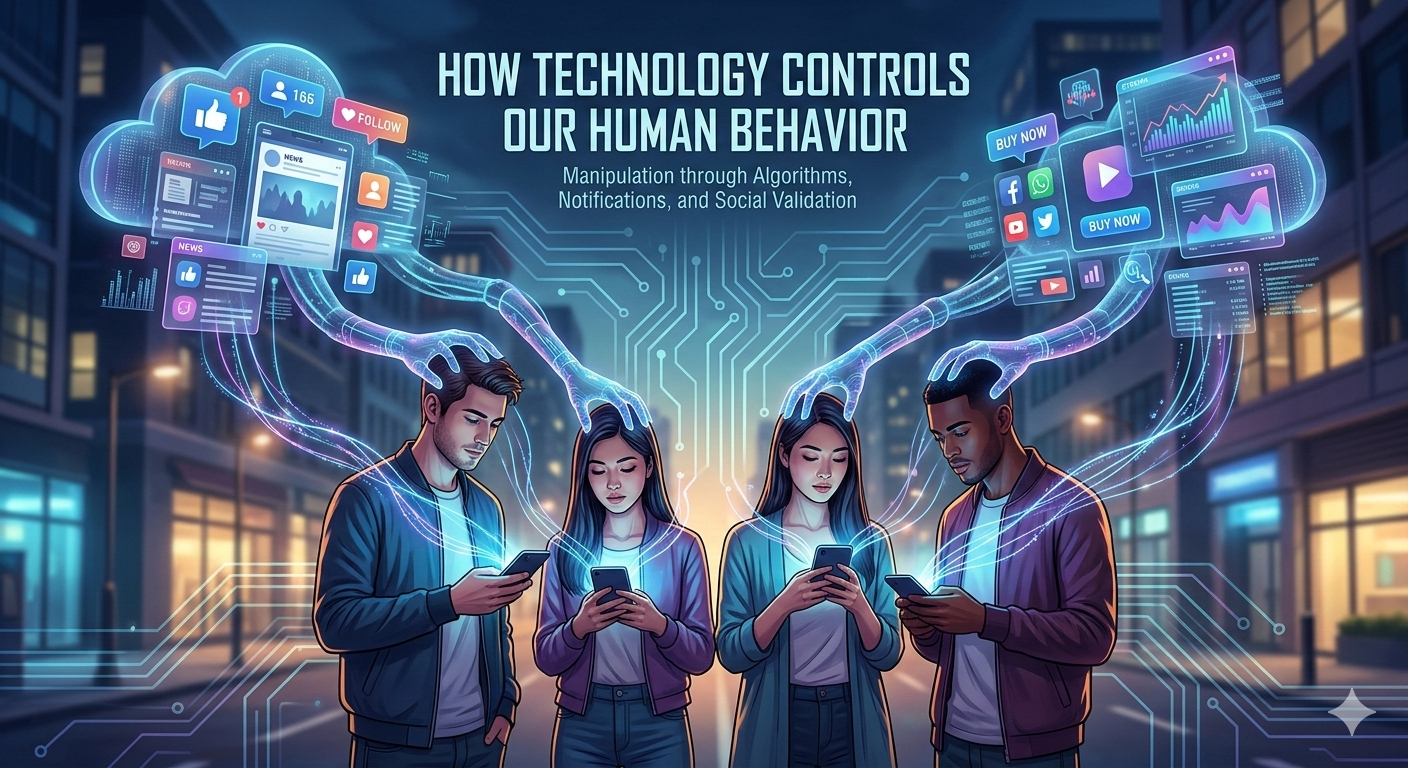
In the modern era, our lives are inextricably linked with technology, making tasks in every sector easier and faster. In an age dominated by advanced tools like smartphones, the internet, and Artificial Intelligence (AI), “Big Tech” giants—such as Google, Meta, Apple, Amazon, and Microsoft—steer our daily flow of information and interactions. While these platforms appear to be simple software providing what we want, they subtly exert control over our minds and behaviors.
How Technology is Hacking the Brain: Capturing Minds Through Algorithms
Modern technology use highly complex algorithms designed to hold our attention indefinitely. Experts call this process “Brain Hacking.” While it may not look like direct “mind control,” it is capable of quietly altering our thoughts, opinions, and habits.
Dopamine and the “Addiction Cycle”
These algorithms are engineered to stimulate the release of Dopamine in the human brain—the same chemical responsible for addiction. Scholars point out that the compulsion to stay glued to a screen is remarkably similar to the neurological state of individuals addicted to gambling or drugs.
Features like Infinite Scrolling, Personalized Recommendations, and constant Notifications trigger the brain’s “Reward System.” Every ‘Like,’ ‘Share,’ or video viewed releases a hit of dopamine, keeping the user trapped in a feedback loop.
The Impact of Technology on Society
Excessive screen time and reliance on algorithms are placing a significant strain on our social fabric:
Weakening Human Connections:
As virtual relationships increase, face-to-face interactions decrease, eroding social cohesion and mutual understanding.
The Intellectual Decline:
While many expected “Gen Z” (the digital natives) to be the smartest generation yet, recent research suggests a troubling trend. For the first time in history, a younger generation is showing a lower average IQ than the previous generation (Millennials). Scientists view this as a symptom of a global intellectual regression.
Technology’s Impact on Critical Thinking Skills
When everything we need is available with “one click,” our capacity for deep thinking, memory retention, and creative problem-solving begins to fade.
The Crisis of Autonomy:
When the daily thoughts and sights of billions are curated by the algorithms of a few corporations, it raises a ethical question about human Autonomy (independence) in the digital age.
5 Simple Steps to Break Digital Addiction
- Disable Notifications: Turn off all alerts except for essential calls and urgent messages.
- Remove Phones from the Bedroom: Avoid using your phone immediately before sleep or right after waking up. Use a traditional alarm clock instead.
- The ‘Grayscale’ Method: Set your phone screen to black and white. This reduces the visual appeal of colorful apps and naturally lowers the urge to check them.
- Tech-Free Zones: Commit to not using your phone during meals or while spending time with family to experience the real world.
- Practice Deep Focus: Dedicate at least 20 minutes a day to reading a physical book or engaging in a creative hobby.
While technology provides us with limitless information, we must not allow it to dictate our thinking patterns or social bonds. The intelligence and mental well-being of future generations depend on the boundaries we set today.